
Six years of supporting kea conservation
21 Sep 26
Since 2020, OneFortyOne NZ Forests has supported kea conservation projects through its partnership with the Kea Conservation Trust. During that time, the focus of the work has evolved from understanding how kea use plantation forests to investigating the threats they face within those landscapes and exploring practical ways to improve their long-term survival.
Over six years, the work has covered:
- understanding interactions between kea and forestry operations, including developing guidelines for forestry operations in kea habitat and identifying opportunities to work with plantation forestry crews to reduce conflict and support coexistence,
- understanding how kea use plantation forests,
- building knowledge about their behaviour, movements, nesting and food sources,
- investigating the threats kea face within plantation landscapes, particularly introduced predators, and how forestry management can help improve outcomes for the species.
The result is a better understanding of how forestry crews can work alongside kea, a much clearer picture of how plantation forests fit within the wider landscape used by kea and the role forestry can play in supporting their conservation.
Why kea matter
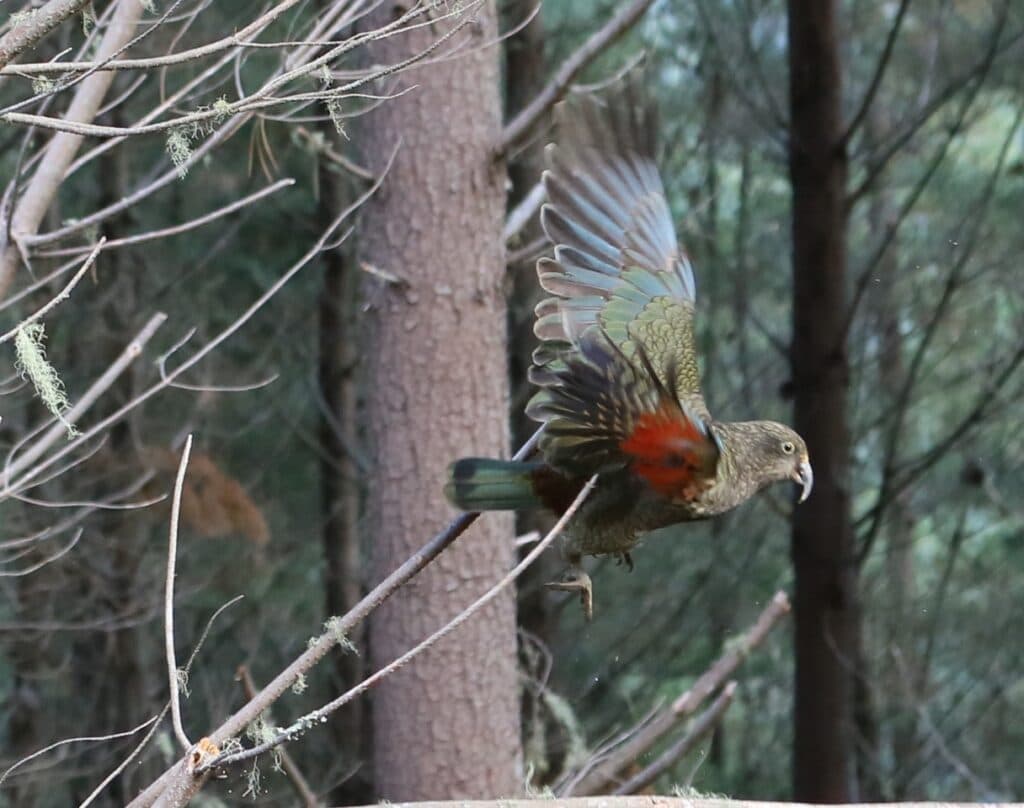
Kea are one of New Zealand’s most recognisable native birds, known for their intelligence, curiosity and adaptability. However, they are also nationally endangered, with populations facing ongoing pressure from introduced predators, habitat change and interactions with people.
While kea are often associated with alpine and native forest environments, relatively little was known about their use of plantation forests when OneFortyOne first partnered with the Kea Conservation Trust. Forestry workers regularly reported sightings, but there was limited scientific evidence showing how these landscapes fitted into the birds’ wider ecology.
Understanding kea in plantation forests
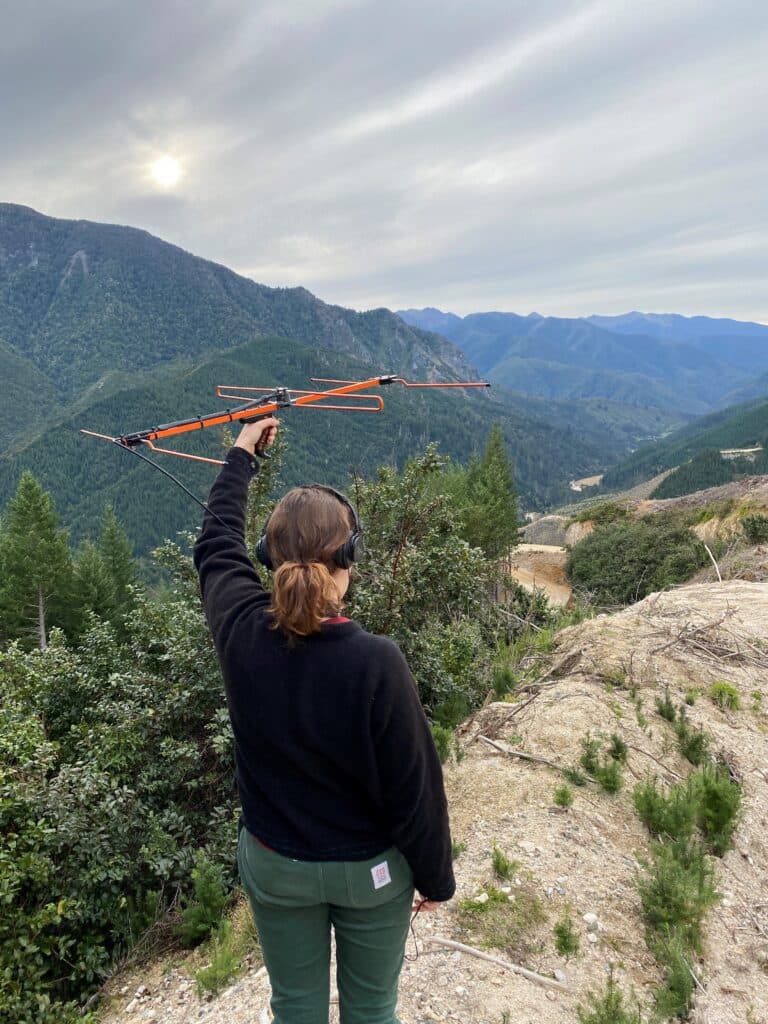
Research led by Lincoln University researcher Jodanne Aitken began in 2020 and sought to better understand how kea use plantation forests in the Nelson Tasman region. Using GPS tracking, field observations and diet analysis, the research showed that kea were regular users of plantation forests rather than occasional visitors.
The study found that kea used plantation forests for feeding and movement throughout the forest landscape. Researchers observed birds feeding on pine seed, huhu grubs and other invertebrates, demonstrating that plantation forests provide resources that kea actively utilise.
The research also showed how plantation and native forests function together as part of a wider habitat network used by kea.
These findings challenged assumptions about kea habitat use and confirmed that plantation forests can play an important role within the landscapes occupied by kea.
Alongside the ecological research, the programme also helped improve understanding of how forestry operations and kea can coexist.
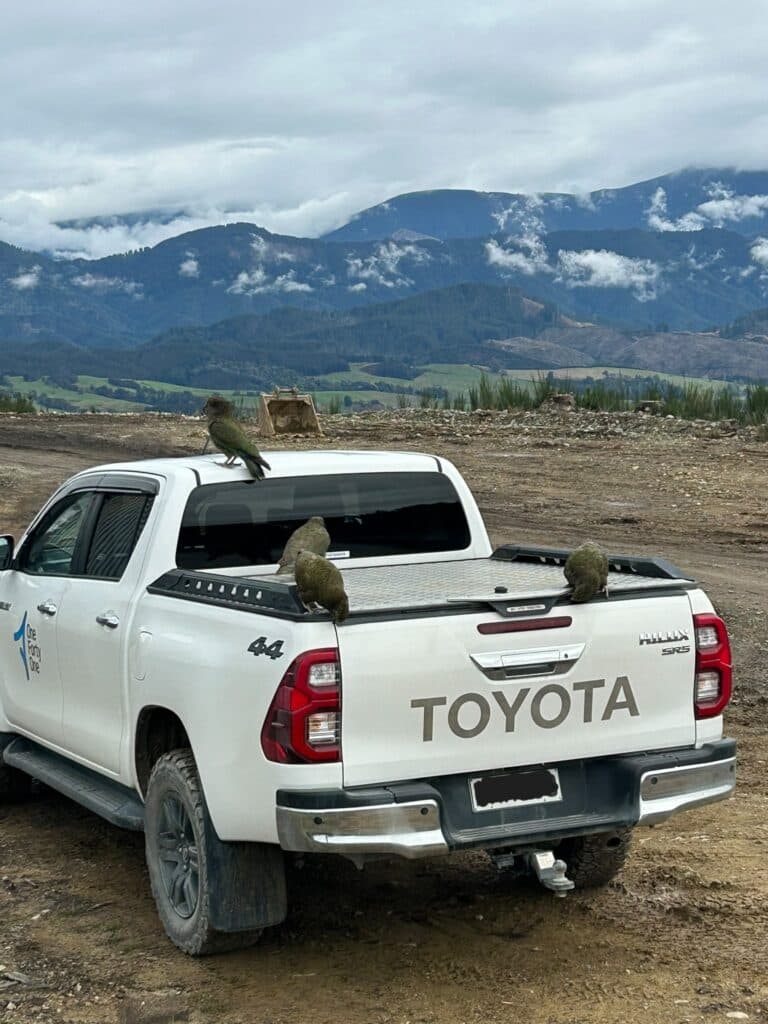
Kea are notorious for investigating machinery, vehicles and equipment, which can sometimes create challenges on operational sites. Over the years, researchers worked alongside forestry staff and contractors, sharing information about kea behaviour and providing practical advice to help reduce interactions. While conflict management was never the focus of a dedicated research project, it remained an important part of the partnership.
According to Jodanne, one of the positive outcomes has been the willingness of forestry crews to support conservation efforts despite the challenges that can arise when kea are present on site.
“The crews still see the joy in having kea at their sites, even though not all parts of them being there are ideal. The crews have been really good to work with.”
The OneFortyOne partnership with the Kea Conservation Trust also supported the development of the Kea Guidelines for Plantation Forestry, helping other forestry companies manage kea habitat and interactions within plantation forests.
The guidelines recognise that many kea encountered on forestry sites are juvenile birds, which often gather in groups and are more likely to investigate machinery, vehicles and other equipment.
The partnership has also supported practical innovation in the field. In recent years, trial work has explored deterrent devices designed to discourage kea from approaching machinery and equipment, providing additional tools to help reduce conflict while protecting bird welfare. As knowledge of kea behaviour grew, so too did understanding of the opportunities plantation forests provide. Kea proved highly adaptable birds capable of finding food and moving through a range of habitats. Plantation forests are now recognised as part of the broader habitat mosaic used by kea in the top of the South Island.
Predators and kea survival
As researchers spent more time monitoring kea within plantation forests, they began observing signs that introduced predators may pose a greater threat to kea than previously understood. During her fieldwork, Jodanne encountered evidence of possible cat predation on kea and began noticing signs that predator pressure may be influencing kea survival within plantation forests. These observations prompted a shift in focus.
Rather than continuing to concentrate solely on where kea occur and how they use plantation forests, researchers began investigating the factors that may influence their survival. The presence of predators raised questions about what was happening to kea once they were there.
As Jodanne explains: “There’s no point in continuously counting these birds or recording their diet if they’re actually just getting nailed by predators. That’s the system we need to understand better if we want to do good by kea.”
Work led by researcher Corey Mosen provided a bridge between Jodanne’s earlier habitat-use research and the current predator programme. Monitoring undertaken in 2024 confirmed that cats and other predators were common within plantation forests, with feral cats recorded at five of the six sites monitored. The findings suggested that kea nesting within these areas would likely be vulnerable to predation and disturbance.
In 2025/26, the research focus narrowed to a catchment within OneFortyOne’s estate where kea had been consistently observed. Trail cameras and traps were deployed throughout the catchment to better understand predator activity and explore what predator management could look like within an actively managed plantation forest.
OneFortyOne supported feral cat and stoat control within the catchment, resulting in the removal of twelve feral cats from the study area. The project provided a clearer picture of predator activity while demonstrating what predator management could look like within a commercial forestry environment.
Future recommendations include continuing predator control and monitoring, while exploring what a larger-scale predator management programme could look like within plantation forestry.
Looking ahead
Over six years, the partnership has built a substantial body of knowledge about kea in plantation forests.
The work has demonstrated that kea actively use plantation forests, improved understanding of their behaviour and diet, strengthened approaches to managing interactions between kea and forestry operations, and identified predator management as an important area for future conservation efforts.
Researchers continue to observe young birds within the wider study area, indicating that breeding populations remain active in the region.
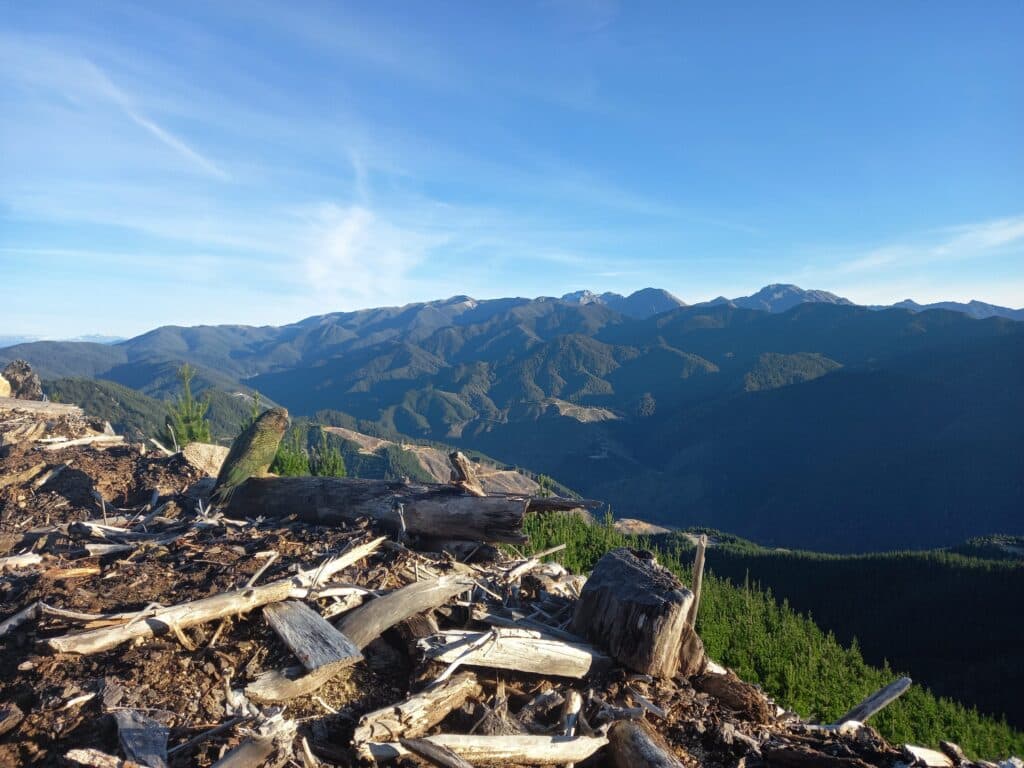
Jodanne believes plantation forests may have an even broader role to play in the future. Looking across the landscape, she sees the potential for plantation forests to help connect kea populations in Kahurangi National Park with those in the Richmond Ranges, where bird numbers are much lower. Realising that vision would depend on ensuring forests remain safe for kea to move through, with effective predator management and practical tools to reduce conflict between birds and forestry operations.
“When I look at the map, I see Kahurangi National Park, then the Richmond Ranges where kea numbers are much lower, and this big green patch of plantation forest in the middle. Potentially, that forest estate could help reconnect those populations, provided it’s safe for kea to move through.”
Looking back, the programme has evolved considerably from the questions first posed in 2020. What began as an effort to understand how kea interact with plantation forests has developed into a broader exploration of how working forests can contribute to the conservation of one of New Zealand’s most iconic native species.
News & Resources

27 Aug 26
Community
Science Experience brings STEM to life for regional students
25 Aug 26
News


OneFortyOne acknowledges the Traditional Custodians of Country throughout Australia and their deep connections to land, water, and community. We pay our respect to Elders past and present and extend that respect to all First Nations people today.
In Aotearoa New Zealand, Māori communities have a strong spiritual connection between people and the land – the wellbeing of one sustains the wellbeing of the other. We strive to build meaningful relationships with iwi as tangata whenua (people of the land/region), to be responsible intergenerational kaitiaki (stewards/guardians) of the land where our forests grow.