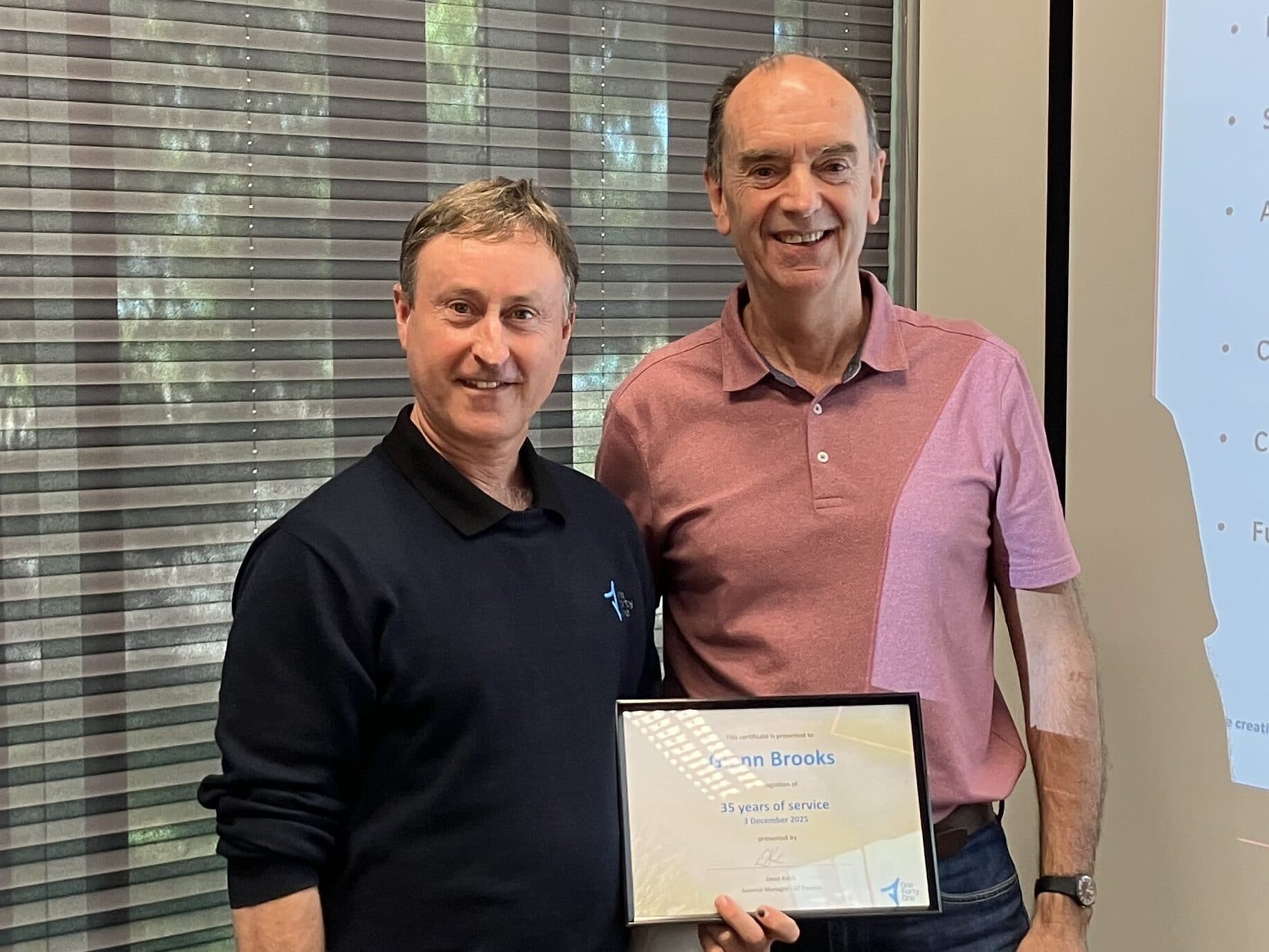
35 years of consistency and care – celebrating a milestone with Glenn Brooks
13 Apr 26
Glenn is the kind of colleague that you know you can rely on when you’re looking for an obscure piece of forest history. He is always happy to help, and, through his diligence and attentiveness, you can be sure that he’ll quickly find the information you need (and it’ll be correct!).
It’s hard to imagine the team without Glenn – his calm demeanour and consistent attention to detail make him the go-to expert in the Planning & Resources team.
Glenn is celebrating a big milestone with 35 years in forestry, so we’re marking the occasion with a Q&A about his career and some of the highlights along the way. Thanks for taking the time and congratulations, Glenn!
How did your career path begin?
I studied forestry at university after admittedly not knowing much about it, other than it sounded like a good field to get into and was easier to get into than veterinary science. During first year about half of the students dropped out. I’m glad I stuck with it.
What’s your current role and what else have you done over these 35 years?
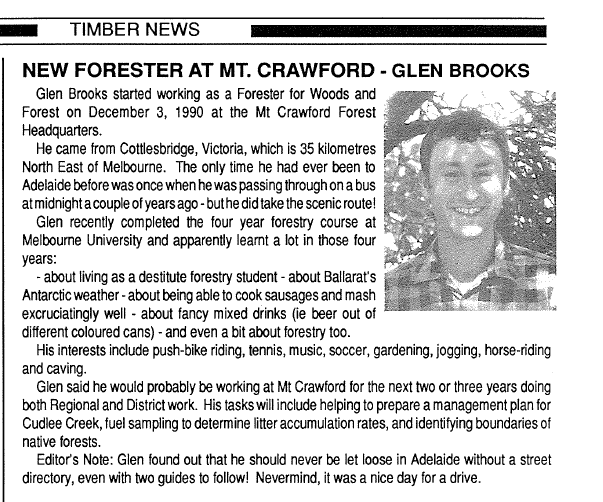
I started working for Woods & Forests straight out of uni and was given the option of either starting in Resources in Mount Gambier or as an operations forester in the Adelaide Hills.
I felt at the time that operations forester would be the best choice since I didn’t know much about Resources (I wasn’t then to know that I was going to end up working for the majority of my career in Resources!).
Working in the Adelaide Hills gave me perspective of how difficult everything was there compared to the GT. Our planting season was typically 200ha per year spread across 10 or so different sites, all with various degrees of difficulty like being on the edge of reservoirs and extremely steep, and having difficult access and many weeds.
When I was transferred to Mount Gambier, our annual programs were about 10 times bigger but getting things done was so much easier.
My current role is Resources Analyst, GT Forests, where I process lots of data to generate estimates of log volume, amongst other things. I have been doing this since 1999. There have been so many changes it would be hard to list them, but I always try my best to learn from previous years to do things better each year.
What have been some of the highlights or memorable moments from your career?
Pretty much every model or cutting plan I have completed, since I know how much work has gone into them and how valuable this information is for the business.
I have worked with many outstanding people here who have help guide me in the right direction.
The history of the forests is amazing. So much industry ground-breaking work has been done here to set things up for what we have today, and we get to leave our legacy for future generations to inherit.
What’s changed in the industry and how has it affected your work?
When I started, there were no Windows computers. At that stage we used the VAX computer system which was command-line only. You had to know a lot of computer syntax to get anything done. I spent a lot of time digitising stocking and site quality maps on digitiser boards. We would have to make a special trip to Adelaide office to print out any maps on their plotter. We thought we were very advanced when we graduated from black and white to a colour plotter (which had 3 coloured pens).
Out of business hours, what are you doing?
Gardening, running, volleyball
What advice would you give someone just starting in forestry and timber?
There are plenty of opportunities in forestry, and there are also a wide range of different jobs available. It’s a great industry and one where the long-term outlook is often the one that matters most.
News & Resources
27 Aug 26
Community
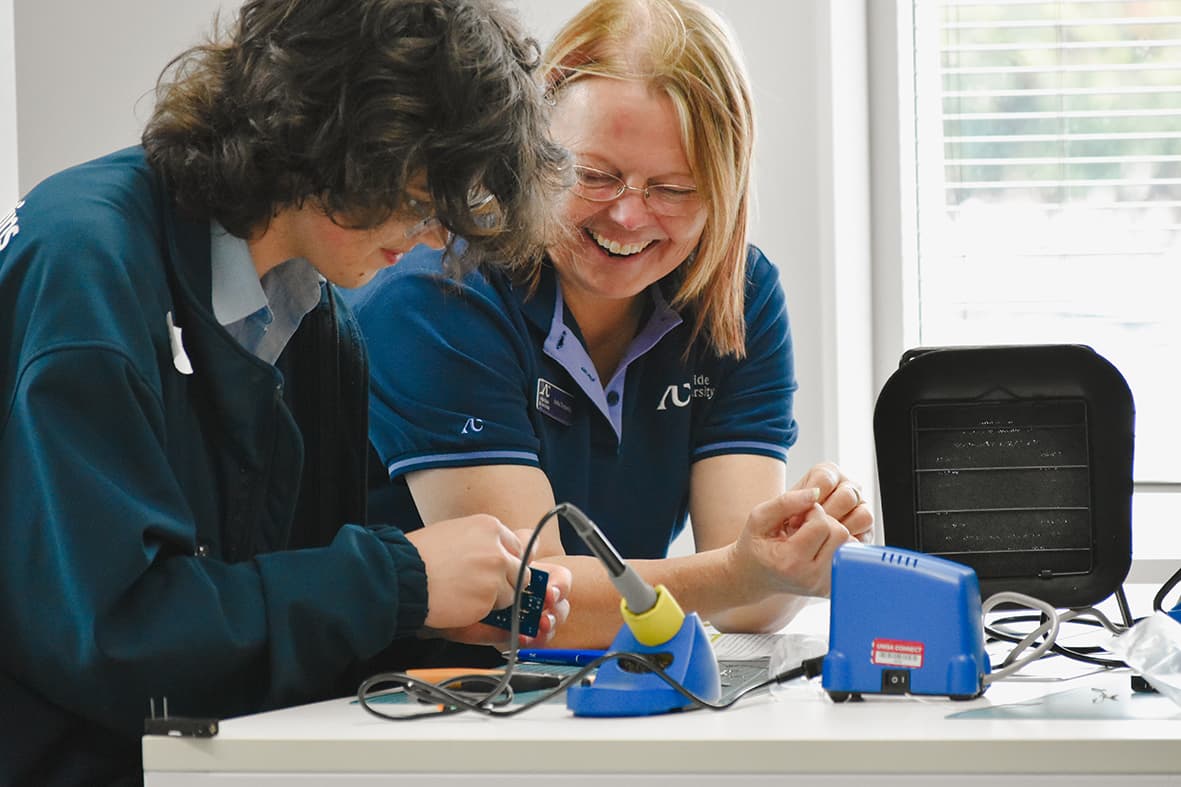
Science Experience brings STEM to life for regional students
25 Aug 26
News
21 May 26
News
OneFortyOne acknowledges the Traditional Custodians of Country throughout Australia and their deep connections to land, water, and community. We pay our respect to Elders past and present and extend that respect to all First Nations people today.
In Aotearoa New Zealand, Māori communities have a strong spiritual connection between people and the land – the wellbeing of one sustains the wellbeing of the other. We strive to build meaningful relationships with iwi as tangata whenua (people of the land/region), to be responsible intergenerational kaitiaki (stewards/guardians) of the land where our forests grow.